
The Jurisdictional Shield: Germany’s Legal Crusade at the ICJ and the Fragility of the Global Rules-Based Order
The Battle of the Peace Palace
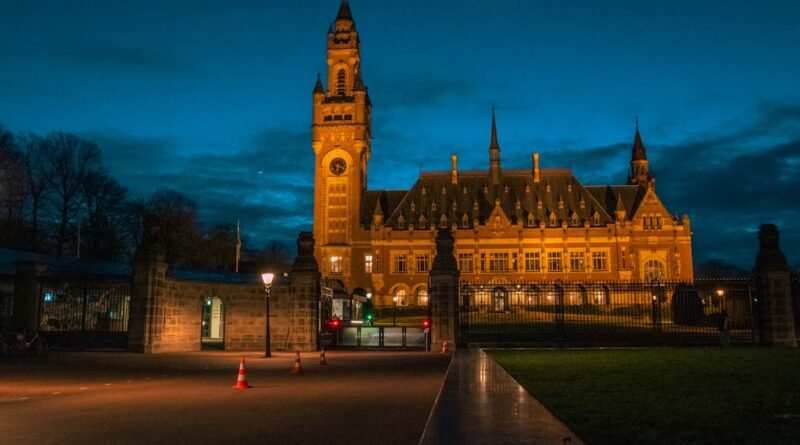
In the quiet, neoclassical corridors of the Peace Palace in The Hague, a high-stakes geopolitical drama is unfolding that threatens to redraw the boundaries of international accountability. Germany’s formal move to challenge the jurisdiction of the International Court of Justice (ICJ) in the case brought against it by Nicaragua is far more than a routine procedural maneuver. It represents a fundamental defense of Western sovereign discretion and a direct confrontation with the rising tide of Global South “lawfare.”
Nicaragua’s legal offensive accuses Berlin of facilitating genocide in the Gaza Strip through its continued political, financial, and military support to Israel. By seeking to have the case thrown out on jurisdictional grounds, Germany is attempting to neutralize a legal precedent that could otherwise hold Western arms-exporting nations directly complicit in the actions of their strategic allies.
The Doctrine of Staatsräson and the Complicity Dilemma
To understand Berlin’s posture, one must look to the core of modern German foreign policy. The concept of Staatsräson (reason of state) binds Germany’s national security and historical identity to the survival and defense of Israel—a moral imperative born from the ashes of the Holocaust. However, this foundational doctrine has collided head-on with the contemporary realities of the Middle Eastern conflict.
“Germany’s legal defense seeks to decouple its bilateral defense exports from the ultimate battlefield conduct of the recipient state, a distinction that critics argue creates a dangerous vacuum of accountability.”
Germany’s legal team argues that the ICJ cannot adjudicate Nicaragua’s claims because doing so would require the Court to rule on the lawfulness of Israel’s military conduct in the absence of Israel itself as a party to this specific bilateral dispute. This “indispensable third party” doctrine, historically known as the Monetary Gold precedent, serves as Berlin’s primary shield. If accepted, it effectively insulates major arms exporters from being held liable in international tribunals for the actions of third-party states.
Lawfare: The Global South’s New Strategic Weapon
The confrontation at The Hague highlights a widening geopolitical chasm. Blocked by Western vetoes at the United Nations Security Council, nations of the Global South are increasingly turning to international judicial bodies to challenge Western hegemony. Nicaragua’s petition, mirroring South Africa’s broader genocide case against Israel, represents a highly coordinated effort to leverage the 1948 Genocide Convention as a tool of asymmetric diplomatic pressure.
This strategy of lawfare seeks to accomplish several key objectives:
- Erosion of Western Moral Authority: By forcing Germany to defend its arms export policies in a public, judicial forum, the Global South exposes the perceived double standards of the Western-led “rules-based international order.”
- Economic and Political Disruption: Legal challenges create significant domestic political friction within Western democracies, empowering local activist groups and complicating defense procurement pipelines.
- Precedent Building: Successful preliminary rulings establish a cumulative body of international jurisprudence that restricts the freedom of action of major military powers.
A Fragmented Architecture of Global Justice
Should the ICJ accept Germany’s jurisdictional objections, it will likely be viewed by much of the developing world as a retreat by the Court into procedural formalism to avoid confronting Western powers. Conversely, if the Court rejects Germany’s objections and asserts jurisdiction, it will open the floodgates for similar complicity lawsuits worldwide, fundamentally altering the global defense trade and the nature of strategic alliances.
Ultimately, the dispute over jurisdiction is a symptom of a deeper systemic crisis. The international legal framework designed in the post-WWII era is struggling to mediate a multi-polar world where the consensus on humanitarian norms has shattered. Whether Berlin succeeds in dismissing the case or not, the trial has already signaled that the era of uncontested Western legal exceptionalism is drawing to a close.